Why BODYBAR Pilates May Be the Best First Step in Your Habit-Forming Exercise Journey
A Fresh Start to Kick Off The New Year
The start of the new year is often the moment when you might actually be able to focus your energy on developing an exercise habit. For many people, this is not new. You’ve tried it before, and the thought of it can sometimes feel overwhelming.
You may be thinking to yourself, Where do I even start?
But you’ve promised yourself: “This is the year I’ll finally commit to exercise.”
Right now, that doesn’t feel possible. Stress is high, schedules are packed, and your mind is ricocheting between obligations while trying to imagine how to make a routine actually stick.
Here’s the good news:
You’re not relying on willpower alone this time.
There’s a mindset shift and a community shift that can make habit-building dramatically easier. Research consistently shows that when people pursue health goals alongside a supportive group, they are far more likely to maintain consistency and feel motivated, connected, and accountable. Mindset gets you started; community keeps you going.
But before we jump into how that works, let’s take a quick look at why fitness habits are so hard to create.
Why Creating New Exercise Habits Is Hard
If you’ve ever tried to start working out “for good” and fallen off a few weeks later, you’re not alone. Research shows it takes an average of 66 days to form a habit, sometimes far longer, especially for complex behaviours that require planning, emotional figure-it-out energy, or delayed gratification.
We often fixate on big, Instagram-worthy results we think should happen fast (weight loss, dramatic physical changes), and when the progress isn’t instant, motivation dips.
Most behaviour-change strategies treat exercise like any other habit, but movement is special: it requires support, positive reinforcement, cues, rewards, and an aligned environment.
And this matters:
A large body of behavioural research on group-based health programs shows that the presence of community significantly increases consistency and long-term habit formation. People stick with something longer when they feel connected, supported, and seen.
So yes, habits are hard, but they get easier when you’re not doing it alone.
The BODYBAR Mindset Shift: Becoming Who You Want to Be
One of the most powerful habit levers is identity. It’s not just what you do: “I’ll go to Pilates,” but who you are: “I’m the person who shows up, who moves with strength, who honors my body.”
Author Benjamin Hardy puts it this way:
“If you want a different life, you must be a different person.”
Anchor your decisions to your identity, and you’re not chasing an outcome; you’re living in alignment with who you are becoming.
Identity-based habits pull you toward action, but community reinforces that identity. When you’re around people who also show up consistently and joyfully, it strengthens the belief that “I’m one of them.” This social belonging is one of the strongest habit-forming mechanisms humans have.
In Dan Sullivan and Benjamin Hardy’s 10x Is Easier Than 2x, they found that transformational goals actually simplify your decisions. You eliminate the distractions and focus on what truly matters. A 10x mindset isn’t about doing more — it’s about doing what is most aligned with who you want to be.
Pilates becomes that focus point: simple, powerful, and sustainable.
The Science of Letting Go of the Outcome
The #1 reason people quit a new workout routine?
They don’t see results fast enough.
Author James Clear calls this the Valley of Disappointment — that early stretch where you’re showing up, but the progress isn’t visible yet.
A powerful way through that valley is to detach the outcome from the decision:
Stop working out to see results.
Start working out because that’s who you are becoming.
Each time you show up, you cast a vote for that identity.
And here’s where community accelerates this:
When others expect to see you — when your instructor knows your name, when you recognize faces in class, when someone says “See you Thursday,” you’re not relying on internal motivation alone.
You’re supported by social reinforcement, one of the strongest predictors of long-term success in behaviour change research.
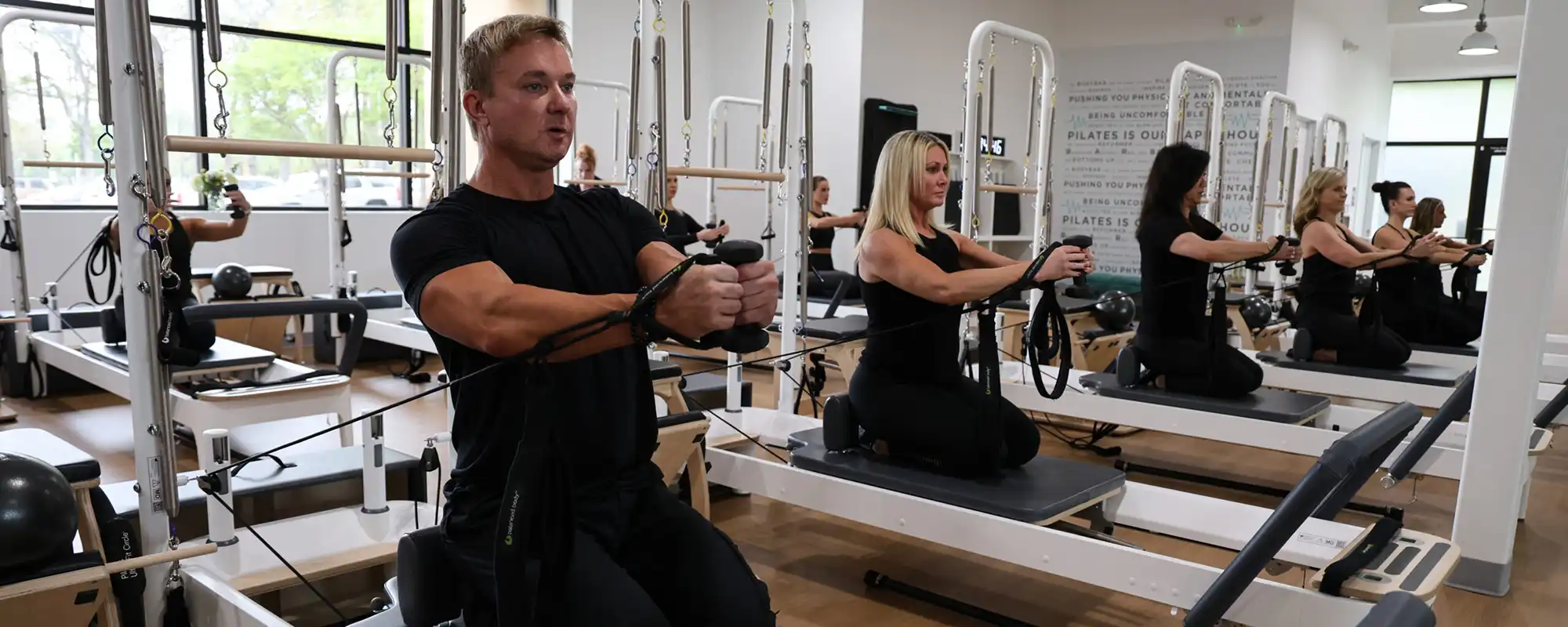
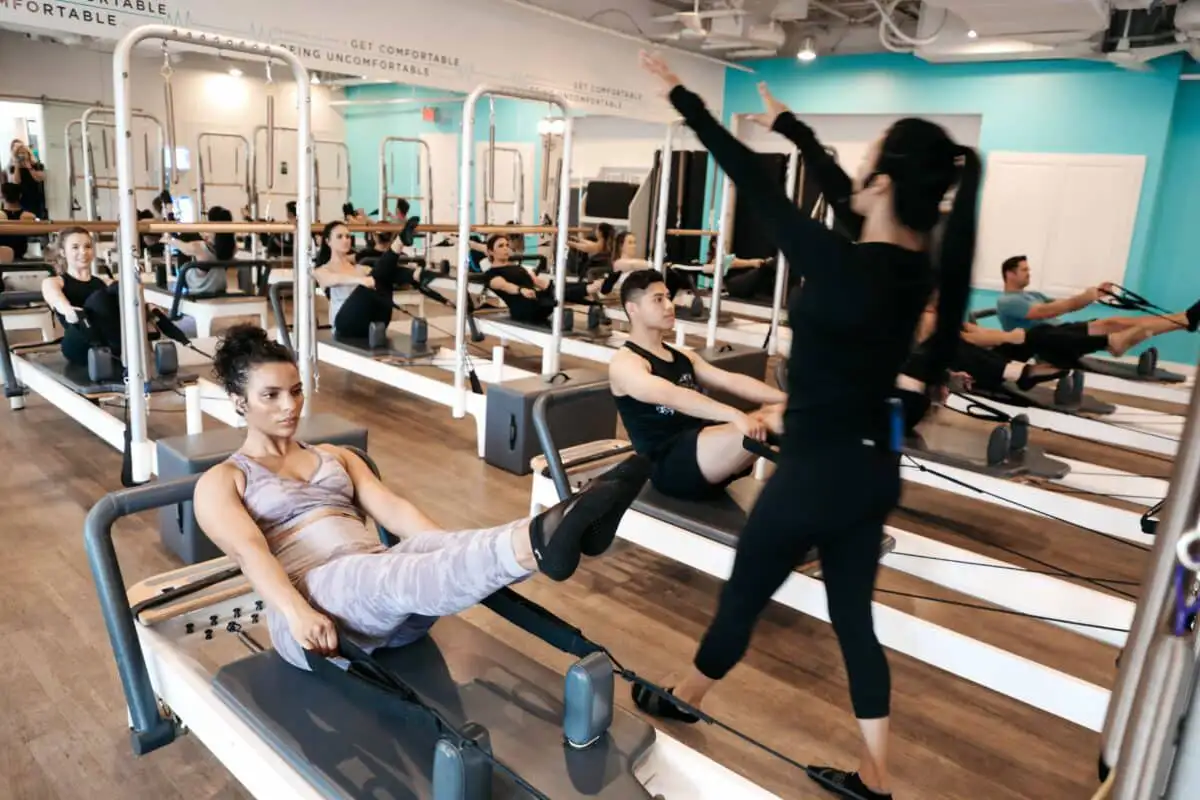
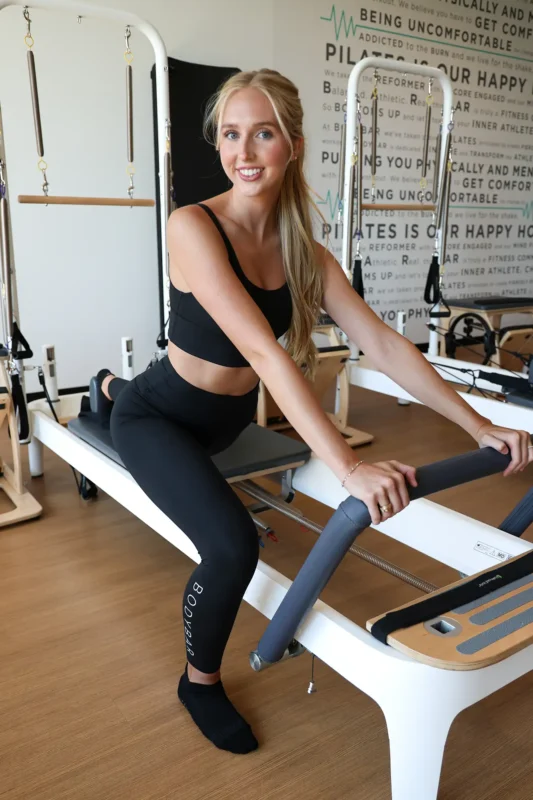
BODYBAR Pilates, especially with its small-group Reformer environment, naturally creates this network of accountability.
BODYBAR Pilates Is Habit-Friendly by Design
Low friction.
No complicated gym-floor setups. Pilates is accessible, safe, and welcoming, lowering the barrier to starting.
Identity alignment.
Pilates is about strength, connection, and presence — not punishment. It supports the identity of “I am someone who moves with purpose.”
Reformer structure + guided expertise.
Our Reformer classes give you a full-body, athletic workout with professional guidance so you’re never left to figure things out on your own.
Instant feedback.
One class = feeling stronger, taller, centered. Immediate reward → stronger habit loop.
Built-in reward loop.
Each session delivers strength, alignment, and clarity. These small wins compound.
Lowered barriers to consistency.
You show up, you move with purpose, it’s scalable and real. Easy to begin; easier to continue.
Community & accountability baked in.
Humans are wired for connection.
Research on group-based health programs shows that people in supportive communities are:
- more consistent,
- able to bounce back when they skip a day (as it inevitably happens),
- more likely to return,
- and more successful long-term.
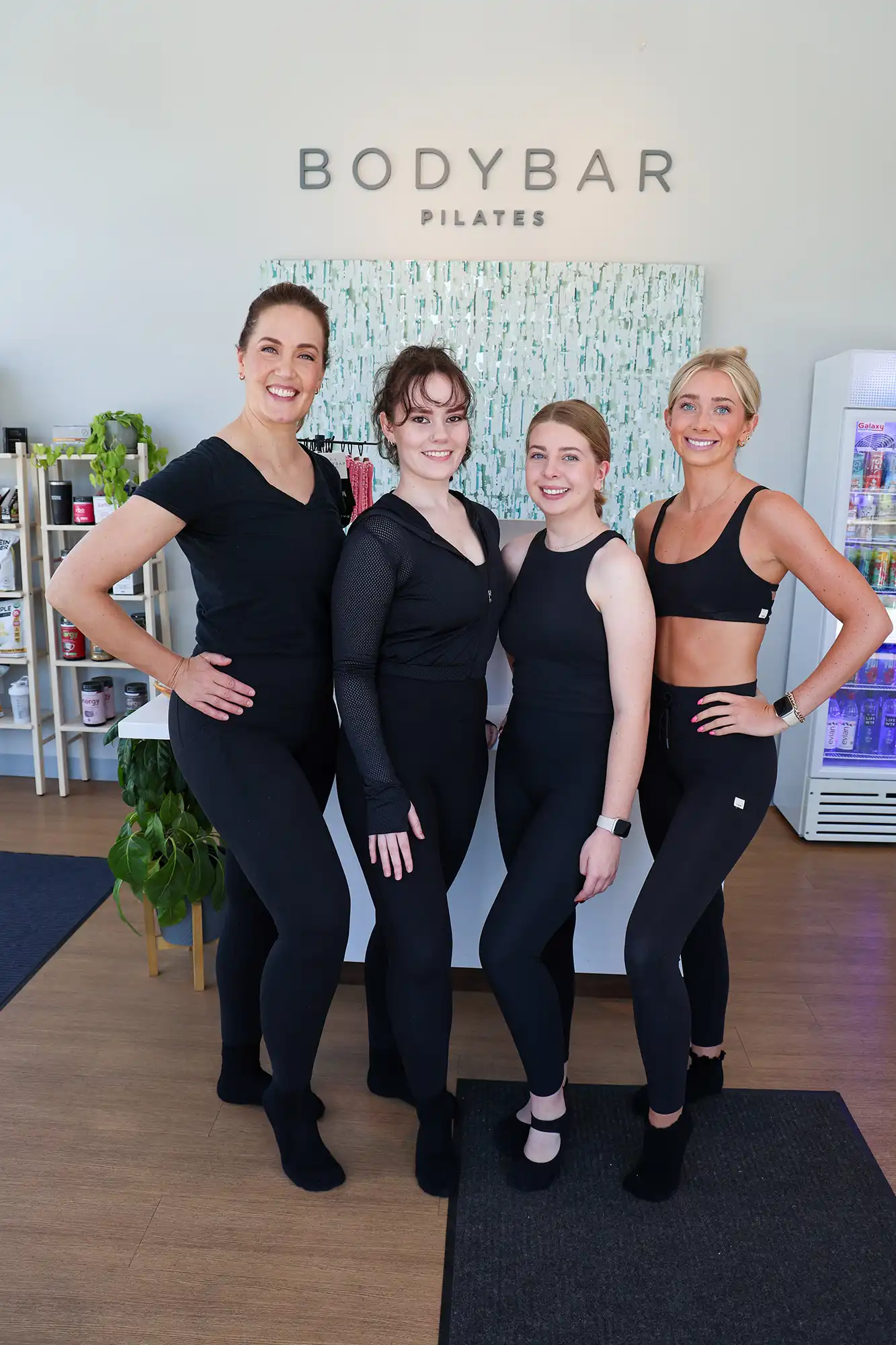
At BODYBAR, the “group show up” culture is part of the magic. Familiar faces, supportive instructors, and a collective energy create external accountability that reinforces your internal identity.
Mindset builds the habit. Community protects it.
Pilates is the foundation that supports core stability, mobility, and confidence — the building blocks of all movement.
Putting It All Together: A Habit-Friendly Pilates Strategy for the New Year
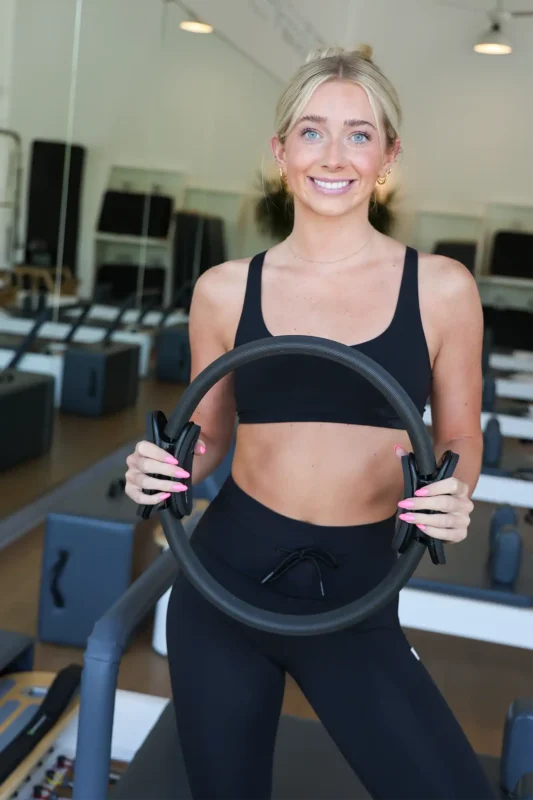
Here’s how to structure a “mindset first” approach using Pilates, guided by habit science and supported by the BODYBAR community.
- Step 1: Choose your cue & make it obvious
One of Clear’s keys: make the cue obvious. For example: “As soon as I walk through the door after work, my Pilates clothes, water bottle, and grippy socks are stacked and ready to go.
Or: “On Tuesdays and Thursdays at 7 am I’ll attend …”
Consistency (same time/place/cue) helps build the loop. - Step 2: Start small and scale
Rather than committing to “2 classes a day, 7 days a week,” start with a manageable frequency/duration: maybe 2 classes per week. BODYBAR classes that are great for beginners include BODYBAR 101 and Stretch & Balance.
Habit research says simplicity and frequency beat intensity at the early stage. - Step 3: Emphasize the positive reward & track it
After each session, note how you felt (stronger, more mobile, less stiff, more energized). This builds the reward layer in the habit loop (“I did it → I feel something good → repeat”).
Tracking (marking “done”) helps cement the loop, builds identity (“I am someone who does Pilates”). - Step 4: Reinforce identity, not just behaviour
James Clear said: “Every action you take is a vote for the type of person you wish to become.”
Frame your Pilates habit not just as “I’m going to exercise” but “I’m the type of person who honours my body, moves with strength, cultivates community, shows up on the Reformer.”
That identity shift helps the behaviour stick. - Step 5: Use community and accountability
BODYBAR Pilates emphasises community (a fiercely effective workout, on/off the Reformer, supportive). You can leverage that. Invite a buddy or make a new Pilates accountability pal at class. Habits stick when social support and structure exist. - Step 6: Gradually build from your foundation
Once Pilates is regular (say, you’ve done it for 3–4 weeks without missed sessions), you can build by increasing frequency, adding elements (maybe a reformer challenge or a strength segment), or layering in an additional BODYBAR class such as the Power Tower. Because you’ve built the habit of showing up, you have a base you can build from rather than starting fresh.
10 Tiny Tips to Build Your Fitness Habit Using BODYBAR Pilates
- Start small — really small.
Commit to just putting on your Pilates workout wear. Then just show up. Even if you don’t feel like you can stay the whole time, every bit counts. You’re not building fitness yet; you’re building consistency. - Anchor it to something you already do.
Habit stacking works. “After I drop the kids off, I go to Pilates.” “After my morning coffee, I go to BODYBAR.”
- Make it obvious.
Put your Pilates clothes where you’ll see them. Visibility = action.
- Make it attractive.
Pair it with something you love – a favorite playlist, a podcast on the way to class, or post-class coffee with a friend.
- Make it easy.
Choose a class time that actually fits your life, not your “ideal” life. Convenience beats ambition.
- Make it satisfying.
After class, write down one thing you noticed improving. Posture, flexibility, confidence? That reflection reinforces progress.
- Focus on identity, not results.
Say out loud: “I’m a person who moves my body with strength and intention.” You’ll start to believe it and take action to reinforce it.
- Use visual cues.
Track your classes on a calendar or app. Watching those streaks grow is a dopamine hit in itself.
- Never miss twice in a row.
Everyone skips a day. The trick? Don’t let one miss become two. Consistency beats perfection.
- Celebrate small wins.
Habit formation thrives on celebration. Share your milestones with your instructor or community. Every “I showed up again!” is a win.
The Heart of It: Mindset + Community = Your Most Powerful Duo
The pressure of the New Year is loud. But the BODYBAR community knows something most fitness messaging misses:
Habits don’t last because you hustle harder. They last because you’re supported in becoming who you will be in 2026.
Creating new habits is hard, but not impossible.
Simplify the path. Detach from the outcome. Lean into community.
Focus on small, consistent actions that shape your identity.
Pilates rewards presence over performance. The Reformer builds your strength. The community builds your consistency. Together, they build your success.
So this New Year, forget the “new me” hype.
Focus instead on the system: Mindset + Reformer + Community = Sustainable habit.
Just show up. Move. Breathe. Embrace the shake.
Become the person who shows up – that’s the habit worth keeping.
Your story isn’t about an eight-week reset. It’s about becoming someone who shows up for strength, movement, and community.
Let’s raise the BAR on who you’re becoming.
Join us at BODYBAR Pilates with your people, in your power, on the Reformer, and build the habit that will carry you.
Transform your BODY. Transform your LIFE.
CHEERS!.