Back to Blogs
What Actually Changes When You Stick With Pilates: A Month-by-Month Guide
Most of what Pilates changes about your body can happen before you see it.
Better control. Stronger holds. More stability. Greater range of motion. That moment when an exercise that once felt impossible suddenly…doesn’t.
Consistent Pilates can build core strength, muscular endurance, flexibility, balance and better movement control. But progress doesn’t happen all at once and it doesn’t look the same for everyone.
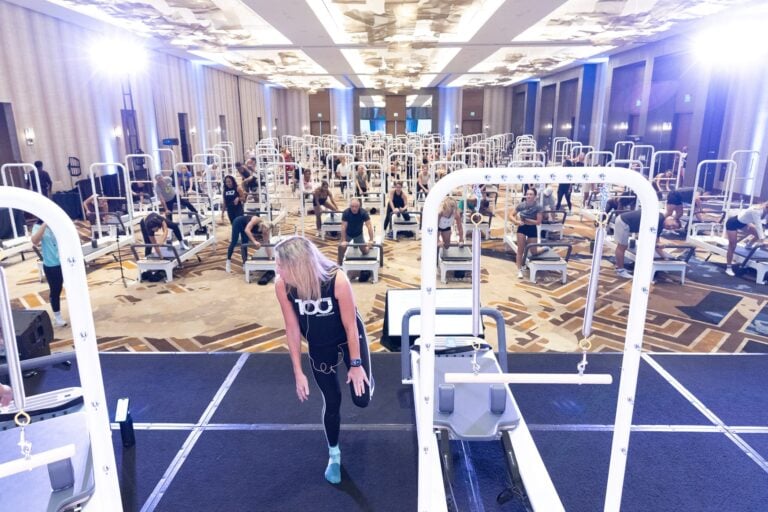
Whether you’re one month in or well past your hundredth BODYBAR class, here’s what may be happening as you keep showing up.
What Happens in Your First Month of Pilates?
Your first few weeks are about building the foundation.
You’re learning to recruit muscles differently, coordinate unfamiliar movement patterns and connect your brain to what your body is doing. You’re also figuring out how to move one part of your body while keeping another stable—which is harder than it sounds.
That’s why month one can feel so strange. You’re shaking in places you didn’t know had muscles.
You’ll notice better coordination. Greater awareness of your core. More confidence with the equipment. Movements beginning to feel more natural from class to class.
A dramatic physical transformation may not happen immediately and that’s okay. Some of the earliest progress in Pilates is about how well you move, not how different you look.
Focus on form over intensity. More resistance isn’t automatically better if it changes your alignment or takes the work away from the intended muscles. Your instructor wants to help you find the work and is there to assist with the correction.
What Changes After Two Months of Pilates?
This is when those Wait, I can do that now? moments can start happening.
Maybe you can hold a position longer. Your balance feels better. The resistance that felt intimidating a few weeks ago feels more manageable. Or you realize you no longer immediately reach for the modification you needed when you started.
As your Pilates practice becomes more consistent, you’re building on that early movement foundation with greater strength and muscular endurance. You’ll start to notice those changes showing up outside of the studio too. Carrying the groceries, taking the stairs, sitting through a long workday and moving through another workout with more stability.
You’ll notice longer holds before the shake sets in. Better balance. Greater control. More stamina throughout class. Familiar movements feeling stronger and more intentional.
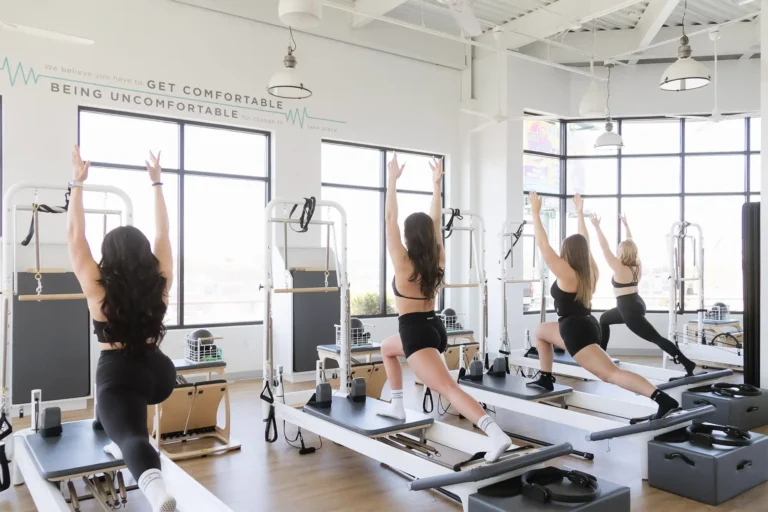
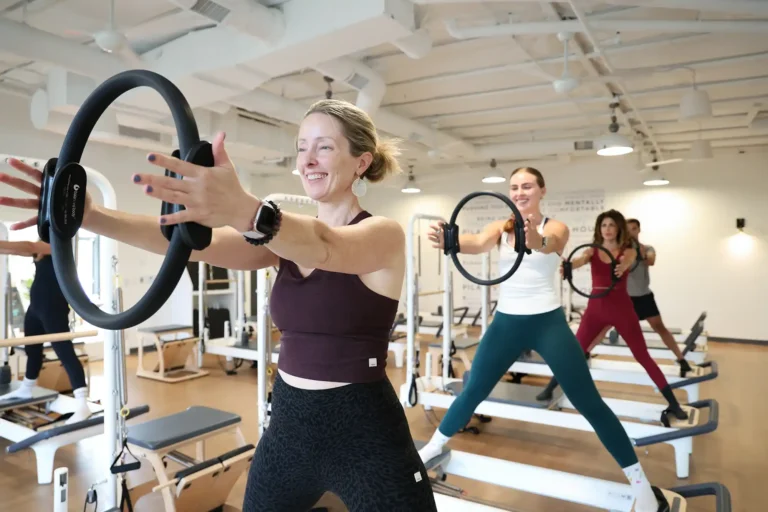
Now is the time to mix up your training. BODYBAR offers 7distinct class formats designed to challenge your body in different ways – from strength and precision to endurance and agility. Trying different formats isn’t just about keeping your routine interesting; it helps create a more well-rounded training program by introducing new movements, equipment, and challenges.
In month 2 the workout didn’t suddenly get easier. You got stronger.
When Do You Start Seeing Physical Results From Pilates?
There’s no universal week when Pilates results suddenly become visible.
How quickly you notice physical changes depends on factors including your starting fitness level, class frequency, nutrition, recovery, genetics and other physical activity.
That’s why the mirror, or the scale, shouldn’t be your only measure of progress.
Look at what you can do.
Can you control the eccentric portion of a movement better? Hold your position longer? Move through a greater range? Maintain your form when you’re tired? Take a progression you couldn’t take before? Those are results, too.
Over time, you may also notice changes in muscle definition, posture or the way your clothes fit. But your strongest evidence of progress may be your own performance.
In months 2-3 you’ll notice greater muscle definition, improved posture, longer holds, stronger movement and more control under resistance.
Consider taking a progress photo, but track performance, too. Make a mental note of what you can do today that you couldn’t do during your first few weeks.
And resist the urge to chase harder-harder-harder. Progression in Pilates isn’t simply more resistance. It’s greater control under the right resistance.
Consistency is Key.
As the months add up, one of the biggest changes may have less to do with a specific exercise and more to do with your routine. Pilates can start to shift from something you’re trying to fit in to simply something you do.
And consistency doesn’t mean doing the same workout over and over. As your practice grows, BODYBAR’s 7 class formats give you different ways to train strength, endurance, stability, mobility and control. Performance and Agility can challenge your endurance, while other formats introduce different equipment, resistance and movement patterns. Together, that variety can help you build a more complete training routine without leaving the BODYBAR studio.
And the physical changes you’ve been building may start showing up everywhere: better stability during another workout, more awareness of your posture, greater mobility or simply feeling stronger and more capable during everyday life.
That’s the kind of strength we’re after. Not just strength for the studio. Strength for life.
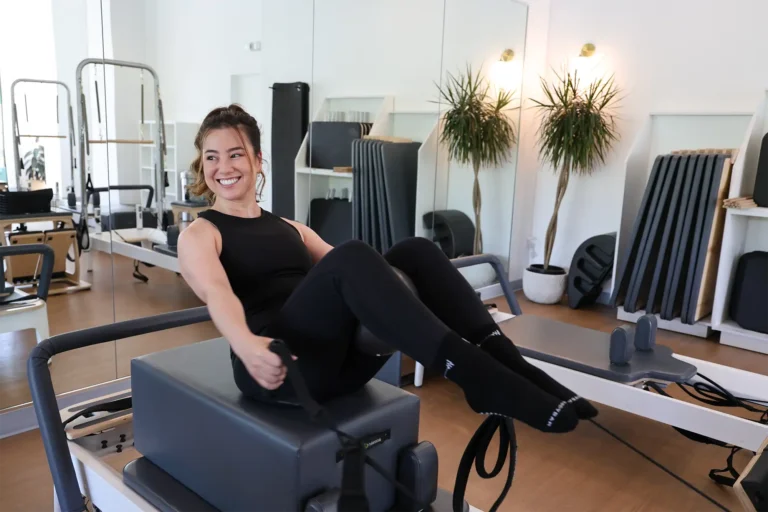
And one of the most memorable parts of your fitness journey – you know your instructors. You recognize the people in your classes. You know who always takes the same spot. Your studio has become one of your places.
Consistency built your strength. Community helped build the habit. Pilates isn’t just something on your calendar anymore. It’s part of how you take care of yourself.
What Happens After a Year of Pilates?
After a year, progress may come from technical precision, greater control and identifying the little compensations your body has been using for years. The gains just become more specific.
A familiar movement becomes completely different when you improve your alignment. An exercise becomes challenging again when you adjust your resistance, increase your range or slow your tempo.
You get better at finding the work.
That’s one of the best things about Pilates: there isn’t a finish line.
If you’ve been with BODYBAR for a year, or several, think about what you can do now that you couldn’t do when you started. That’s progress.
How Often Should You Do Pilates to See Results?
For many people, practicing Pilates two to three times per week can provide regular opportunities to build strength, refine technique and develop greater movement control while allowing time for recovery.
But there’s something even more important than hitting a perfect number: Consistency. Two classes a week that you can maintain over time can be more valuable than an aggressive schedule you can’t sustain.
Every stage on this list has one thing in common. You kept showing up.
Frequently Asked Questions About Pilates Results
How long does it take to see results from Pilates?
Pilates results vary based on your starting point, consistency, fitness level, recovery and other factors. Some people notice improvements in coordination, body awareness and movement quality within the first several weeks, while improvements in strength, flexibility and muscular endurance develop with consistent practice over time.
How many times a week should I do Pilates?
There’s no one-size-fits-all answer. For many people, two to three Pilates sessions per week can provide a consistent training routine while allowing for recovery. Your ideal frequency depends on your goals, experience level and other physical activity.
Why am I not seeing results from Pilates?
If your progress feels less noticeable, consider whether your body is still being appropriately challenged. Trying a different class format, adjusting resistance when appropriate, changing tempo, increasing range of motion or focusing more closely on technique can create new opportunities for progress.
Does Pilates build muscle and strength?
Pilates uses resistance and controlled movement to challenge muscles throughout the body. Consistent Pilates practice can help improve muscular strength and endurance, particularly when exercises are progressively challenged over time.
Can Pilates improve posture?
Pilates emphasizes core strength, alignment, body awareness and control, all of which can support better posture. Individual results vary, and Pilates shouldn’t be considered treatment for an injury or medical condition.
Is Pilates enough for a complete workout routine?
Pilates is a powerful foundation for a well-rounded fitness routine, at BODYBAR, your training goes beyond a single class format. 7 distinct formats incorporate different combinations of strength, endurance, stability, mobility and control. Performance and Agility add an endurance-focused challenge, while other formats vary equipment, resistance and movement patterns.
Individual results vary. Exercise recommendations should be adapted to your fitness level, goals and individual needs. If you have an injury, medical condition or concerns about beginning or changing an exercise program, consult an appropriate healthcare professional.